How to Wake Up Early
Waking early is less about willpower and more about sleep cycles, light, and habit. Here’s how to shift your wake time without feeling wrecked.
What Is Waking Up Early?
Waking up early means rising at a time earlier than your current habit, typically before 6:30 or 7:00 a.m. The goal is to align your wake time with your schedule, whether work, exercise, or quiet morning hours, while feeling rested rather than exhausted. Success depends on sleep quality, circadian rhythm, and how you structure the transition.
Difficulty waking early can be a symptom of delayed sleep phase disorder, sleep apnea, or chronic sleep deprivation. If consistent efforts to shift wake time fail after 2-3 weeks, a medical evaluation is warranted. Alarm strategies work best when underlying sleep health issues have been addressed.
Sleep Cycle Alignment
Sleep runs in roughly 90-minute cycles. Waking between cycles, during light sleep, feels easier than waking in the middle of deep sleep. If you need to be up at 6:00, count backward in 90-minute blocks from that time. For example, 7.5 hours of sleep puts you at 10:30 p.m. bedtime; 6 hours at 12:00 a.m.
This is not exact (cycle length varies), but the principle holds. For more detail, see sleep cycle explained. Pair cycle alignment with a consistent bedtime. Going to bed at different times each night makes early waking harder.
Gradual Adjustment Strategy
Jumping from 8:00 to 5:30 overnight usually backfires. Your body needs time to shift. Move your wake time earlier by 15–20 minutes every three to four days. Set your alarm clock for the new time and go to bed 15–20 minutes earlier to match. After a week or two, you will have shifted an hour without the shock of a sudden change.
Use a timer or stopwatch to track how long it takes you to fall asleep if you are unsure about your ideal bedtime. Consistency matters more than perfection.

Alarm Placement
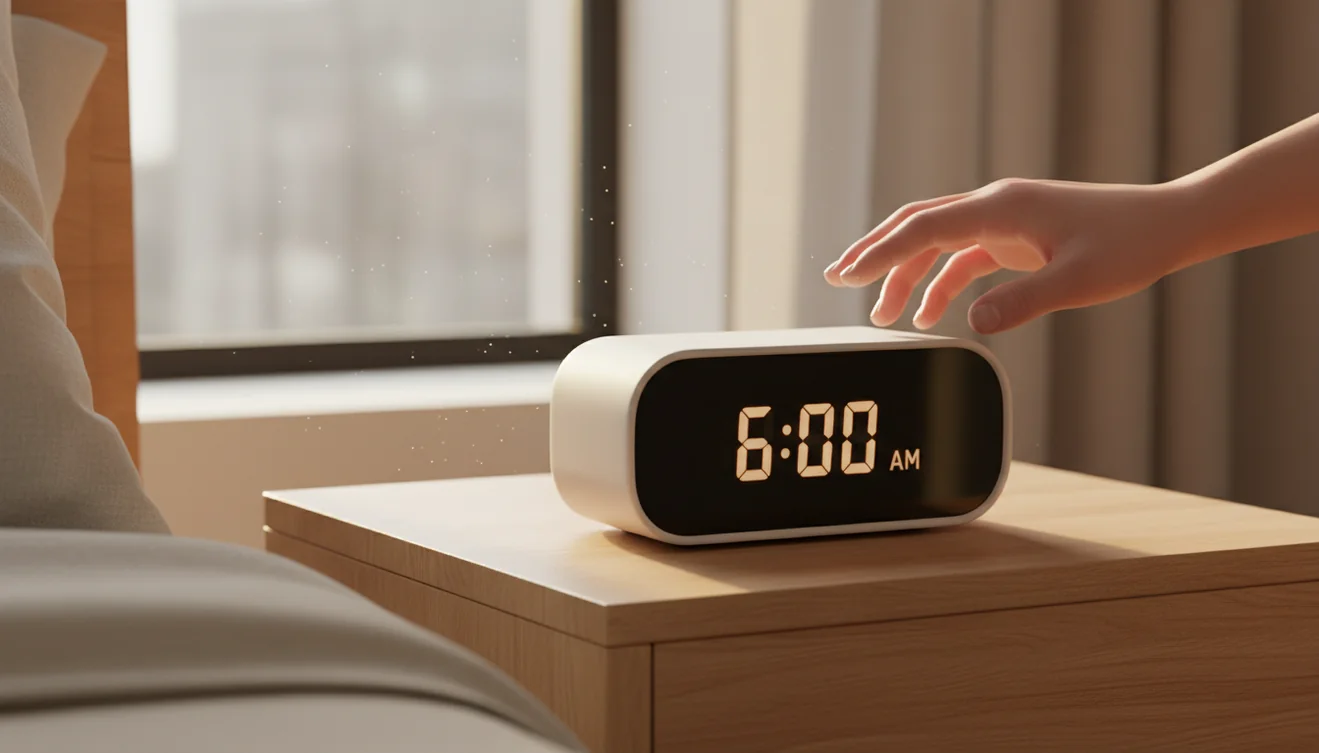
An alarm on your nightstand is too easy to silence and roll over. Put it across the room (on a dresser, shelf, or desk) so you have to stand up and walk to turn it off. That movement breaks sleep inertia and makes going back to bed a conscious choice rather than a reflex.
If you are a heavy sleeper, consider an alarm clock for heavy sleepers with mission-based dismissal. Having to solve a problem or take a photo forces you to engage before you can silence it.
Light Exposure
Light is the main signal that tells your brain it is time to wake. Open curtains as soon as you get up. If you rise before sunrise, use a dawn simulator or a bright lamp on a timer. Even 10–15 minutes of bright light in the morning helps reset your circadian rhythm and suppresses melatonin.
Conversely, avoid bright screens late at night. Blue light delays melatonin release and pushes your natural sleep time later. For better sleep quality, see sleep sounds for better sleep.
The Snooze Trap
Snooze feels like a compromise, a few more minutes of sleep. In practice, those minutes are low-quality. You drift back into a new sleep cycle, and when the alarm rings again, you may be deeper in sleep than before. The result is more grogginess, not less.
Set the alarm for the time you actually need to get up. No snooze. If you struggle, use an app that disables snooze or requires a task to snooze. For short rests, use a nap alarm clock instead of snoozing your main alarm.

Bedroom Temperature
A cool room supports deeper sleep. Most people sleep best around 65–68°F (18–20°C). Your body temperature drops during sleep; a hot room disrupts that and can cause restless nights. In the morning, a slight increase in temperature, from getting out from under the covers, opening a window, or turning up the heat, helps signal wakefulness.
If you use a programmable thermostat, set it to warm the room 15–30 minutes before your alarm. The combination of warmth and light can make the transition out of bed smoother.
How to Wake Up Early App
An online alarm works for basic wake-ups, but early rising often requires extra help: loud alarms, mission-based dismissal, and no snooze. Alarmy offers these features and is built for people who need a stronger nudge to get out of bed. Pair it with the habits above: consistent sleep times, light exposure, and alarm placement.
For more on building a morning routine, see morning routine tips and best alarm sounds to wake up. Compare options in our alarm clock vs phone alarm guide.
Related Guides
Frequently Asked Questions
Waking early is difficult when your body is still in a sleep cycle, when you are sleep-deprived, or when your circadian rhythm is set for a later wake time. Light exposure, consistency, and gradual adjustment help reset your rhythm.
Most people need 1–2 weeks to adjust to a new wake time. Shifting by 15–30 minutes every few days is easier than jumping by an hour or more at once.
Snooze fragments sleep and can increase grogginess. Setting the alarm for your actual wake time and getting up on the first ring is more effective for establishing an early routine.
Light exposure in the morning signals your brain to suppress melatonin and feel alert. Opening curtains, using a dawn simulator, or stepping outside shortly after waking can make early rising easier.
A cooler room (around 65–68°F or 18–20°C) supports deeper sleep. Warming up in the morning, through light, movement, or a slightly warmer environment, helps the transition to wakefulness.
Placing the alarm across the room forces you to get out of bed to turn it off. This physical movement helps break sleep inertia and makes it harder to fall back asleep.
Waking during light sleep (between cycles) feels easier than waking during deep sleep. Aligning your alarm with the end of a ~90-minute cycle can reduce grogginess. See our sleep cycle explained guide for details.
To wake at 6:00 AM after five 90-minute sleep cycles, go to bed at 10:30 PM. Allow 15-20 minutes to fall asleep, so get into bed by 10:10-10:15 PM.
Drinking water shortly after waking helps rehydrate the body after 7-8 hours without fluids. Dehydration contributes to fatigue and sluggishness. A glass of water within 10 minutes of waking supports alertness.
An alarm clock app with mission-based dismissal forces cognitive engagement before the alarm stops. Alarmy requires completing tasks like math problems or photo missions, which prevents the half-conscious dismissal that leads to oversleeping.