Morning Routine Tips
A good morning routine is not about perfection. It is about consistency, a few non-negotiables, and habits that make waking up less of a fight.
What Is a Morning Routine?
A morning routine is a set of habits you do in a consistent order after waking. It can be as simple as alarm, water, light, or as detailed as meditation, exercise, and a full breakfast. The goal is to reduce decision fatigue and signal to your body that the day has started.
Most people overcomplicate it. The best morning routines are short, repeatable, and built around a few anchors: when you wake, what you do first, and how you transition from sleep to alertness. If you struggle with waking, pair these tips with an alarm clock that actually gets you up, or an alarm for heavy sleepers if you sleep through standard alarms.
Morning routine advice is general guidance, not medical advice. Chronic fatigue, excessive daytime sleepiness, or inability to function in the morning despite adequate sleep duration may indicate a medical condition such as hypothyroidism, anemia, or a sleep disorder.

Consistency Over Perfection
The single most important factor in waking easier is a consistent wake time. Your circadian rhythm adapts to when you get up. If you wake at 6 a.m. on weekdays and 10 a.m. on weekends, your body never fully adjusts. Aim for the same time within 30 minutes every day, including weekends.
Do not chase a perfect 5 a.m. routine if you are currently waking at 8. Move your alarm 15 minutes earlier each week until you reach your target. For more on shifting your schedule, see how to wake up early.
Alarm Timing Strategy
Set your alarm for the time you actually need to get up, not 15 minutes earlier “for snooze.” Snooze trains your brain to ignore the first alarm. One alarm, one wake-up. If you use multiple alarms as backup, space them far enough apart that the first one has a real consequence if you miss it.
Consider your sleep cycle. Waking during light sleep feels easier than waking from deep sleep. Sleep cycles are roughly 90 minutes. Aligning your alarm with the end of a cycle can reduce grogginess, though this requires somewhat consistent sleep duration.
Hydration and Light Exposure
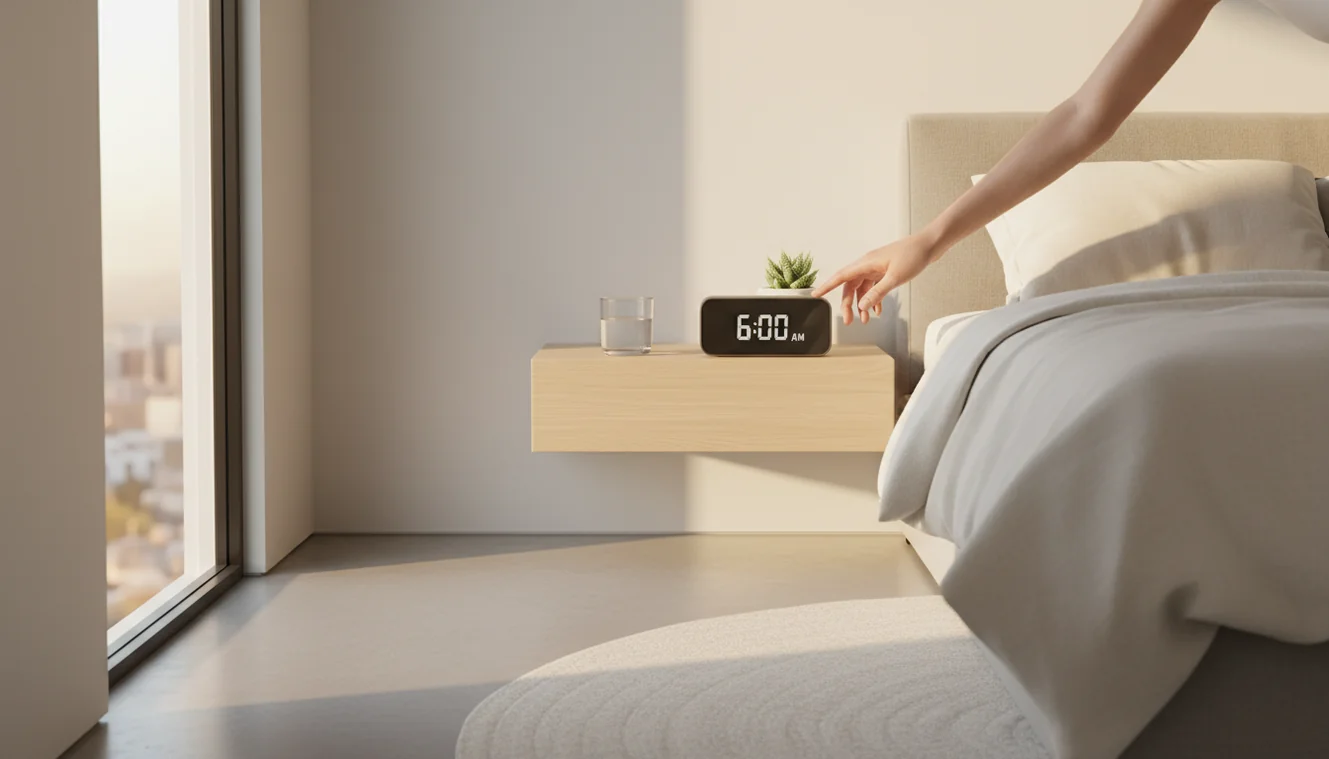
Drink water within the first 10–15 minutes of waking. You are dehydrated after 7–8 hours without fluid. A glass of water helps with alertness and kickstarts your system. Keep a bottle by your bed so you do not have to decide to go get one.
Get light within 30–60 minutes of waking. Sunlight is ideal; a bright lamp works if it is dark. Light suppresses melatonin and tells your circadian clock it is daytime. Even 5–10 minutes helps. Combine with a short walk or standing by a window for a stronger signal.
Avoiding the Snooze Button
Snooze fragments sleep into 5–10 minute chunks. You never reach restorative sleep in that window; you only deepen sleep inertia. Each time you hit snooze, you reset the grogginess. The result: you feel worse than if you had gotten up on the first alarm.
If you cannot trust yourself, use an alarm that disables snooze or requires a mission to snooze. Place your phone across the room so you have to get up to turn it off. For short rests, use a nap alarm clock with a fixed duration instead of snooze.

The 5-Minute Rule
Get out of bed within 5 minutes of your alarm. Do not lie there “just a few more minutes.” The longer you stay, the harder it gets. Moving your body (standing, walking to the bathroom, opening a window) breaks sleep inertia. The act of getting up signals that sleep is over.
If 5 minutes feels impossible, start with “feet on the floor.” Once your feet touch the ground, the rest follows. Build from there.
Habit Stacking
Habit stacking means attaching a new habit to an existing one. The formula: “After [existing habit], I will [new habit].” Example: “After I turn off my alarm, I drink a glass of water.” The alarm is the trigger; water is the new behavior.
Stack small. Add one habit at a time. Once it sticks, add another. A morning routine of alarm → water → light → timer for a 5-minute stretch is more sustainable than a 12-step plan you abandon in a week. For sound-based habits, see sleep sounds for better sleep and best alarm sounds to wake up.
Morning Routine Tips App
An alarm app can enforce habits that a basic alarm cannot. Mission-based dismissal (solve math, take a photo, shake the phone) forces you to engage before turning off the alarm. You cannot snooze mindlessly. Alarmy offers these features plus loud tones for heavy sleepers.
Use the app as one piece of the system. Consistency, light, and hydration matter as much as the alarm itself.
Related Guides
Frequently Asked Questions
There is no single best routine. Consistency matters more than perfection. A good routine includes a fixed wake time, light exposure soon after waking, hydration, and avoiding snooze. Start small and add habits over time.
Sleep inertia (the grogginess after waking) is normal. It is worse after fragmented sleep, snooze cycles, or waking from deep sleep. Consistent bedtimes, avoiding snooze, and light exposure help reduce it.
Yes. Snooze fragments sleep into short intervals that deepen sleep inertia. Each snooze can leave you groggier. Set your alarm for the time you actually need to get up and get out of bed immediately.
The 5-minute rule: get out of bed within 5 minutes of your alarm. Do not lie there “just a few more minutes.” Moving your body breaks sleep inertia and signals that the day has started.
Light suppresses melatonin and signals your circadian clock that it is daytime. Exposure to bright light (or sunlight) within 30–60 minutes of waking helps regulate your rhythm and reduces grogginess.
Habit stacking means attaching a new habit to an existing one. Example: “After I turn off my alarm, I drink a glass of water.” The existing trigger makes the new habit easier to adopt.
Get out of bed immediately, drink a glass of water, and expose yourself to bright light within the first 10 minutes. These three actions suppress melatonin, rehydrate the body, and signal the brain that the day has started.
Yes. Consistent wake times regulate the circadian rhythm and make waking easier over time. Sleeping in on weekends shifts the rhythm and creates "social jet lag" that makes Monday mornings harder.
An alarm clock app with bedtime reminders and wake-up missions helps build consistent morning routines. Setting both a sleep reminder and a mission-based alarm creates accountability at both ends of the night.
Habit formation research suggests 18 to 254 days, with an average of 66 days for a new behavior to become automatic. Starting with one or two small habits and adding more over weeks is more sustainable than overhauling the entire morning at once.